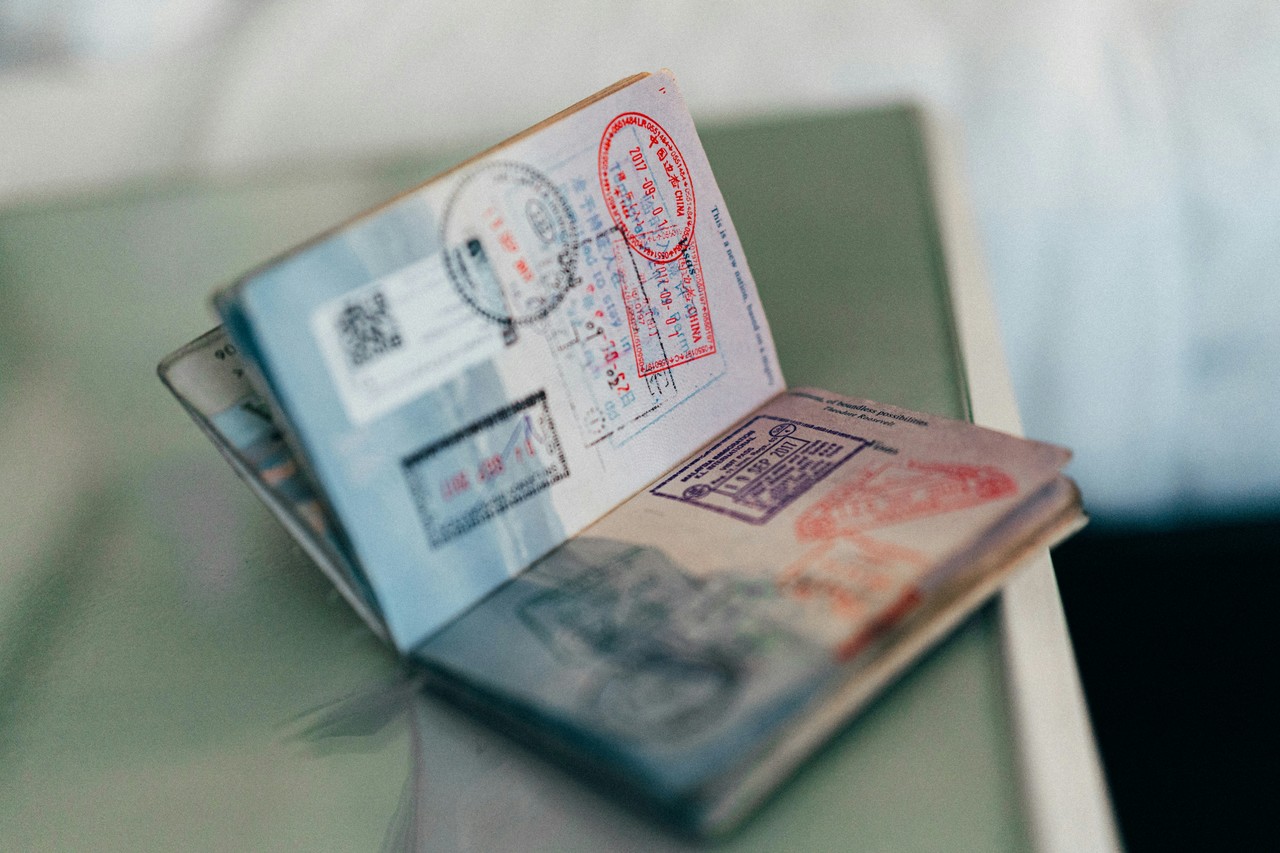
For Burmese students like myself, getting the opportunity to study in the Czech Republic is one of the greatest accomplishments. However, with this opportunity comes a significant challenge while navigating the visa application process. Among the required documents, the most difficult and stressful to obtain is the police clearance letter (also called the police criminal extract).
Applying for such a document might be a straightforward administrative process for many people around the world – they just need to fill out a form, pay a fee, and wait between a few minutes and a few days, depending on the country. However, for Burmese citizens, especially in the current political climate, it is far from easy, coupled with several complicated steps.
Step 1, a Potentially Dangerous Visit to the Police Station
Obtaining a police clearance letter in Myanmar begins at the local police station. This step alone can be dangerous, particularly for young people. For the youths (mainly male youths), the risk is heightened under the junta, also called State Administration Council (SAC), and its new conscription law (2024).[1] Police officers may check whether applicants fall under the law’s requirements and, if so, detain them.
The risk is even greater for anyone who has participated in the Civil Disobedience Movement (CDM). The military junta seriously targets and monitors CDMers and supporters of the former government under the National League for Democracy (NLD) or the current exile government, the National Unity Government (NUG), making them more vulnerable to arrest, harassment or retaliation. Yet students have no choice – without this document, the visa application will be considered incomplete. Some people turn to brokers or intermediaries, but this often carries its own dangers. In this regard, intermediaries may sometimes even provide fraudulent documents, and it is impossible for students to verify their legality on their own. This puts them at significant legal and security risks beyond the financial pressures and exploitations.
Legalization at the Ministry of Foreign Affairs – Another Barrier
After the police clearance letter is issued, it must be translated to English and notarized, and then legalized by the Ministry of Foreign Affairs (MOFA) in Myanmar. This stage presents several complications. MOFA requires either the applicant or an immediate family member listed on the household registration to appear in person. Friends or intermediaries are not accepted. On top of that, the person attending must present the applicant’s original National ID card. For those living abroad, this is a major problem – many keep their ID with them, and in some cases, the ID expires and cannot be renewed without returning to Myanmar.
For legalization of the documents at MOFA, it can only be completed at Yangon or Nay Pyi Taw. Appointments at Yangon’s MOFA office are notoriously difficult to secure. During my application period, appointments could only be booked via SMS, with no guarantee of when an appointment slot would be confirmed. The reason for this inefficient system is the absence of a transparent, systematic way to show which numbers have been distributed and how many slots remain. Therefore, the wait could extend for months. For instance, in my case, I sent an SMS following the exact format of Yangon’s MOFA announcement, but I haven’t received any replies or any confirmation of an appointment slot.
In Nay Pyi Taw, walk-ins are allowed, but the process is also tough. It involves hours of bus travel, standing in long queues for token numbers, and waiting several days for legalization. Therefore, people need to stay in Nay Pyi Taw for days (seven to ten days) to complete the process. The reason is that with hundreds and thousands of token numbers, individuals must present as stand-by in front of the office and wait until their number is called. If a token number is missed without knowing the exact calling time, the person needs to reapply for a new token, further prolonging the process. However, people have no choice but to follow this route, as it is the only means to complete with certainty, compared to Yangon’s MOFA office option, despite the challenges such as long waiting times, and financial burdens for stay and travel.
Additional Risk if You are a Member of a Minority Group
For me, and many others from Myanmar, the reality is even harsher if you are a member of an ethnic minority. In my case, being of Arakanese ethnicity causes more difficulties. This single fact influences every step – and not in my favor.
The recent fighting between the Myanmar military and the Arakan Army (AA), combined with the military’s territorial losses in the Rakhine State, has intensified hate speech and targeted threats against ordinary Arakanese civilians in SAC-controlled areas of Myanmar, particularly in Yangon and Nay Pyi Taw. This kind of hostility comes from the side of pro-SAC and military communities, making those Arakanese who have relocated due to ongoing clashes in the region vulnerable. Arakanese people—especially the youth—are being targeted and closely surveilled as part of these political efforts.
Therefore, simply showing up at certain offices, especially police stations to request official documents, can immediately arouse suspicion and create a real risk of arrests. Even some notary offices refused to handle my documents, fearing they could be detained merely for assisting an Arakanese client. When I asked them why, they replied that: “We don’t exactly know but there were some random checks and if they see Arakanese clients' documents, we may be detained for no reason.”
Risks to Family Members of the Visa Applicant
Because I am outside the country, my family had to handle some steps for me – including traveling to Nay Pyi Taw for the MOFA legalization process, since Yangon’s appointments are impossible to get in time (it can take over two months to get an appointment).
The journey to Nay Pyi Taw itself is dangerous. The road between Yangon and Nay Pyi Taw has multiple security checkpoints. My family members, who moved to Yangon because of the conflict in Rakhine State, risk interrogation or harassment at these checkpoints simply because they are related to me, an Arakanese CDM student living abroad. Only my older brother fully understands the MOFA’s legalization procedure, while my elderly parents are unfamiliar with how things work in Yangon or Nay Pyi Taw, yet he himself is a CDM teacher, making it impossible for him to travel to these government offices without taking extreme risk. And for me, returning to Myanmar to manage these administrative steps by myself is not an option, as it would be unsafe and could result in detention. In the end, I was forced to rely on informal and very expensive channels just to obtain the necessary documents, a process that caused constant anxiety and uncertainty because there seemed to be no safe official alternative.
Studying in the Czech Republic: Opportunity with Risks
Obtaining a single official document is not a simple administrative matter for many people in Myanmar, particularly those in conflict-affected areas or from ethnic groups. It means navigating political unrests, heavy bureaucracy, and serious personal risks, turning every step into a negotiation between survival and dignity.
Although sharing these personal experiences is not easy, it is essential to acknowledge them and discuss them openly to bring about any sort of meaningful changes. This is not only my story; it reflects the struggles of thousands of Burmese who dream of studying or working abroad, especially those hoping to study in the Czech Republic or other countries that require the police clearance letter as part of the visa application.
Since the military coup in 2021, ongoing wars have displaced countless people within Myanmar, while many others are dispersed in refugee camps or as migrants in neighboring countries. For reasons described above, many find it nearly impossible to obtain official documents from the junta-controlled offices, fearing arrest, ethnic discrimination, and politically motivated harassment.
I am a participant in the CDM, currently living abroad through a study program. Because of its cruel actions, I do not recognize the junta as a legitimate government. Yet even in this role, I am still forced to engage with its bureaucracy to continue education, a requirement that feels like legitimizing the very regime I oppose.
[1] Myanmar's military government enacted a mandatory conscription law in February 2024, requiring most men aged 18–35 and women aged 18–27 to serve in the military for at least two years. The law, which was passed in 2010 but never enforced until now, also applies to professional men and women up to ages 45 and 35, respectively, with a three-year service requirement. Penalties for evading service include up to five years in prison.