
This article was first published on TeaCircle.
Federica Cidale and Jeremy Htet argue that the Shan State Progress Party (SSPP) is shaping digital nation-building on Facebook amid Myanmar’s conflict.
Introduction
EAOs have been central to Myanmar’s politics throughout the country’s protracted armed conflict, with the post-2021 coup further expanding the landscape of non-state armed actors. This article examines how EAOs construct and communicate quasi-state identity through social media, focusing on the Shan State Progress Party (SSPP). As one of Myanmar’s older and more institutionally continuous EAOs, the SSPP’s ambiguous political positioning makes its claims to legitimacy both contested and particularly revealing for understanding how armed groups perform statehood online.
Constructing statehood
Nations are not natural formations but the product of deliberate nation-building: shared language, symbols, and narratives that tie populations into political communities. This Westphalian model was exported globally through colonialism, but in Myanmar, imposed on deeply diverse ethnic communities, it never properly held, giving rise to EAOs as a direct product of that tension.
Weber defines the state by its “monopoly of legitimate force within a fixed border”, while Tilly describes states as “coercion-wielding organisations”, and Krasner distinguishes between Westphalian sovereignty and domestic sovereignty. Yet coercive capacity alone does not explain how authority is made legitimate. Anderson’s concept of “Imagined Community” is key: nations are socially constructed through shared symbols and narratives. Billig and Hobsbawm & Ranger extend this, showing how nationhood is reproduced through everyday practices like flags and ceremonies. EAOs in Myanmar draw on both symbolic and material means, such as governance structures, healthcare, education, and development projects, to mirror the functions of a recognised state and increasingly project this quasi-state identity online. This is most visible in Myanmar’s borderlands, echoing the pre-colonial Mandala polity in which power weakened with distance from the centre.
Myanmar’s digital transformation has accelerated this dynamic. Internet penetration surged from 2% in 2011 to 72.5% by 2026, with Facebook becoming effectively synonymous with the internet and functioning as the country’s primary public space. As digital access expanded into rural and border areas, it created new possibilities for EAOs operating where state institutions have historically been weakest. Building on Tønnesson et al., who find that EAOs use social media to depict themselves as capable and legitimate states, this article applies that insight to the SSPP.
The Shan State: historical and political context
The Shan people are ethnically and linguistically distinct from the dominant Bamar, historically governed by hereditary rulers known as Sawbwas, engaging in tributary relationships with Burmese kingdoms. During British and Japanese rule, the Shan State retained significant self-administration. In the post-war period, Shan nationalism became entangled with the opium trade, partly sustained by CIA-backed Kuomintang forces. Throughout that period, the Shan State Army (SSA) was founded in 1964, followed by its political wing, the SSPP, in 1971. Due to internal political disagreements, the SSA dissolved in 1976; however, a faction reorganised within the SSPP, which subsequently re-established an armed wing under the same name, SSA.
In Shan State, several groups fought for Shan independence, eventually consolidating under the Mong Tai Army (MTA) in 1985 under drug lord Khun Sa. After his surrender in 1996, the two main factions became known as the SSA-North and SSA-South (Institute for Security and Development Policy, 2018). Tensions escalated sharply in 2015 when the SSA-N refused to sign Myanmar’s ceasefire agreement, while the SSA-S did, and since 2016, the two have clashed repeatedly rather than uniting against the junta, much to the discontent of the Shan people.
The SSPP’s own trajectory is equally complex. In 2014, the military attacked its base camp despite an active ceasefire. When the junta pressured EAOs to integrate into its Border Guard Force, two of the SSPP’s three brigades complied. Following the 2021 coup, the SSPP briefly declared support for revolutionary forces before retracting its position a day later. This history of ambiguity makes it a productive case for examining how an EAO constructs digital sovereignty under conditions of contested legitimacy.
Why the SSPP
The SSPP was selected for several reasons. It is one of Myanmar’s older EAOs, offering a rich institutional history through which to analyse identity construction. Its political positioning is ambiguous, having signed a ceasefire with the junta, clashing with the SSA-S despite representing the same Shan people, and not officially supporting the post-coup revolutionary movement. It makes its claims to legitimacy both harder to sustain and more interesting to examine. This ambiguity has generated public scepticism, making its digital self-presentation politically consequential. The SSPP also maintains an active, publicly accessible Facebook page, making it suitable for systematic analysis.
The empirical basis for this article is a content analysis of 15 posts from January to March 2026, chosen to capture routine communication rather than any specific event. Posts were coded using a deductive framework derived from theoretical literature, organised around four thematic categories: online statehood performance, legitimacy building, relational identity construction and offline reality. Together, these patterns reveal how the SSPP navigates the tensions of its ambiguous political position, deploying digital communication as a way of asserting sovereignty and constructing a Shan political identity. Full details are provided in the annex.
Online Statehood Performance
Regarding infrastructure development, SSPP showed themselves taking the role of municipality in their controlled areas of northern Shan State. In early 2026, SSPP battalions worked with locals to build a clean-water pipeline in Nang Ler village, Kyaukme District, and to clear Yangon Road in Aung Jaing village, Namkham Township. Chairman General Phang Fa opened two new bridges, Nam Nim and Nam Hei, in Mung Thaung village, Mong Nawng Township (March 4). These efforts highlight SSPP’s focus on regional development. Monks, nuns, officials, and residents also attended the opening of the two new bridges, which reflect religion-backed legitimacy-building for SSPP in those areas. Recent talks between the SSPP and the military council show the group engaging in discussions on regional development and stability, complicating simple portrayals of armed groups in Shan State as purely destructive.
In the healthcare sector, SSPP frames itself as a community supporter in their controlled areas. SSPP posted that its health department sent a medical team to 19 villages in Namkham Township to provide healthcare for residents, soldiers, monks, the elderly, and disabled persons (January 10). SSPP Info has regularly posted updates on such healthcare services for local communities. By reaching out to marginalised and less fortunate groups, it also works as a strategic effort to strengthen inclusive welfare and trust in northern Shan State.
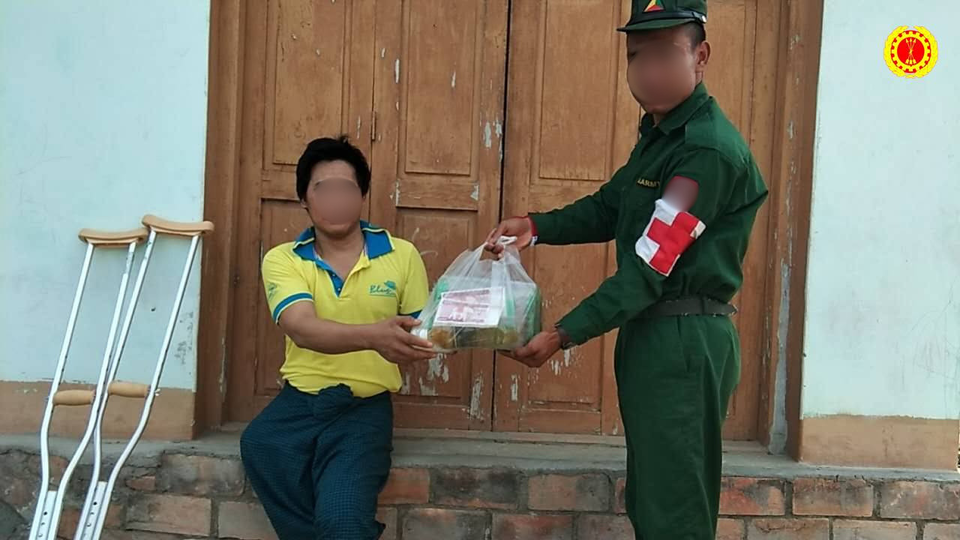
Figure 1. A photo of SSPP troops providing aid to residents in Namkham Township (source: SSPP Info)
Furthermore, SSPP presented themselves as a parallel education system provider in the current conflict situation in Myanmar. For instance, SSPP officials attended a national school training ceremony in Mung Ya village, Pan Saing (February 15). Over 100 students, teachers, parents, monks, and elders joined the event. The post said that SSPP‑run schools teach Burmese, English, Chinese, and Shan culture and history, aiming to prepare children as future leaders. In reference to this post, SSPP-run schools are providing a multilingual curriculum and aiming to cultivate the younger generation’s loyalty to the Shan national identity. The presence of monks also shows their use of Buddhism as a foundation for religion-backed legitimacy. Using the Shan language, such as “ၶဝ်ႈႁူမ်ႈ ပၢင်ပွႆးလူင်းပၢင်သွၼ် ႁူင်းႁဵၼ်းၸိူဝ်ႉၸၢတ်ႈ” (attend the national school graduation ceremony) (SSPP Info, 2026) in the post, the ceremony shows their effort to present themselves as legitimate, not a separate and insurgent group. Ultimately, it is clear that they are trying to claim the central role despite local problems and fragmentation.
Legitimacy Building
In the context of Myanmar, online legitimacy building emerges as a central strategy for the EAOs. SSPP issued statements on their position on ongoing conflicts, organised Shan national events, posted updates on clashes with Myanmar military troops, and deployed shared symbols to position themselves as legitimate defenders of the Shan people.
Facebook content suggests that SSPP is actively preserving its military legitimacy in northern Shan State. For example, SSPP denied any connection with the Myanmar military and condemned bombings near Nam Kong, Hai Seng, and Na Pyin villages on January 9, urging the military to clear the area while calling on the military to protect civilians and regional stability. It also reported a clash with Myanmar military troops near Pon Whoe and Kwan Hin villages in Kyaukme Township, repeatedly emphasising with the words “လုံး၀” “လုံးဝ” (“No” “No”) that it had no ties to the military (SSPP Info, 2026). Through this messaging, SSPP presents itself as a responsible stabilising force. Notably, SSPP uses the neutral term “မြန်မာ့ တပ်မတော်” for the military instead of more critical labels such as “junta.” The reported clash lasted only about one hour, leading some observers to describe it as “fake fighting,” which may reflect SSPP’s preference for neutrality or limited cooperation rather than direct confrontation. Since agreeing to a ceasefire in 1989 and renewing it in 2012, SSPP has generally favoured cautious coexistence with the military while avoiding formal alignment with revolutionary forces during the current civil war. Overall, both SSPP’s actions and its language use on Facebook toward the military indicate a deliberate strategy of neutrality or non-confrontation.
Furthermore, SSPP is organising Shan national events to preserve their cultural legitimacyin Shan State. SSPP hosted the 79th Shan State National Day at Wanhai headquarters on February 7, 2026, with about 2,000 officials, soldiers, and local people. This event commemorates the 1947 formation of the Shan State Council at the Panglong Conference, which SSPP uses to reinforce a distinct Shan identity through shared history, symbols, and collective memory. The event invoked the Panglong Agreement, the first Shan flag and anthem, and the historically self-governing Sawbwas. Phrases such as “Panglong agreement” and “the first-time adoption of the Shan national flag and anthem” demonstrate how the SSPP symbolises its political existence. Displaying the Myanmar, Shan, and SSPP flags together constructs a narrative of a federal union even in the absence of an actual federal system. In this way, SSPP simultaneously strengthens a distinct Shan ethnic identity and frames it within the Union framework rather than as separate from it, highlighting its past reconciliation efforts with the Myanmar military. It also invokes the historical unification of fragmented Shan states under the Sawbwas, tying contemporary claims of unity to earlier patterns of Shan political organisations.
Relational Identity Construction
SSPP builds relational identity through a diverse network of ethnic groups, elites, Buddhist monks, and local communities. These connections allow the group to frame itself not merely as an armed actor but as a provider of alternative governance in northern Shan State.
The SSPP is working for inter-ethnic unity and an alternative governance structure through ethnic cultural festivals. SSPP announced that it sent a high‑level delegation to the 20th Akha “Kha Htang Pha” New Year festival in Mai Lar Township (January 2026). Representatives from Akha, Shan, Kokang, and Lahu communities joined in dances, rituals, exhibitions, and sports events at the celebration. The participation of SSPP leaders and multiple ethnic communities shows how SSPP is trying to show an image of inter-ethnic unity and alternative governance structure in northern Shan State, instead of a simple cultural festival.
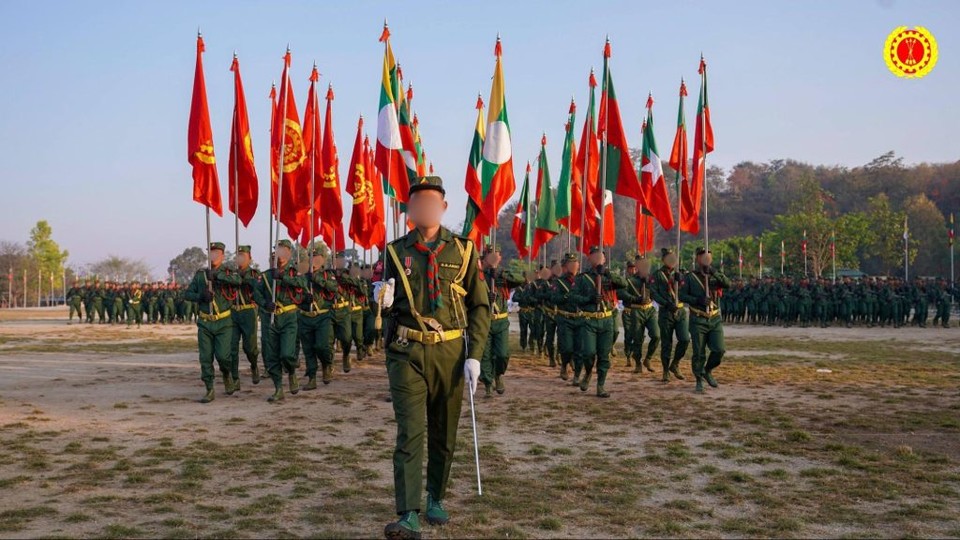
Figure 2. The celebration of the 79th Shan State National Day ceremony held at Wanhai on February 7, 2026 (Source: SSPP Info)
Additionally, the SSPP is presenting itself as a legitimate, participatory authority and religious peacebuilder on Facebook. SSPP officials held a public consultation in Namkham Township with about 400 residents, village leaders, and troops discussing security, governance, education, and ethnic unity and later organised three‑day tributes and merit‑sharing ceremonies for fallen soldiers (January 28). They also met with the Restoration Council of Shan State (RCSS) in Kun Hein town to build trust, reduce tensions, and promote peace in Shan State (March 2). This kind of public consultation positions SSPP as a legitimate, participatory authority in the region. The three‑day tribute highlights collective memory and internal solidarity, while the March 2 meeting with RCSS signals Shan ethnic unity and peace‑building amid fragmentation in Shan State. Taken as a whole, these activities show how SSPP portrays itself as an inclusive authority that reaches beyond the Shan majority to smaller ethnic groups like the Akha, broadening legitimacy and strengthening inter‑ethnic ties in northern Shan State.
SSPP leaders also build elite legitimacy through strategic networking and public displays of influence. On February 14, SSPP Info shared images of Chairman General Soa Pan Pha’s son’s wedding, attended by around 3,000 guests, including allies and special representatives, highlighting the group’s strong elite connections. However, this type of personal content may weaken public trust, despite the group’s frequent posts about supporting local communities, promoting inter-ethnic unity, and maintaining regional stability. Similarly, General Shwe Ngao Fa’s family donated 150 million kyats to Wan Hai’s religious festival, showcasing both the wealth and generosity of SSPP elites. Overall, these examples show how SSPP constructs legitimacy through ethnic relations and elite networking to reinforce its social and political influence.

Figure 3. The wedding ceremony of SSPP Chairman General Sao Pan Pha’s third son on February 13, 2026 (source: SSPP Info)
Online Image Versus Offline Reality
SSPP’s online presentation from January to March 2026 reveals how they construct themselves to be community developers or stabilisers in the northern Shan State. Their content highlights efforts to provide infrastructure development, healthcare, and education to local communities while preserving the Shan national identity, all reinforced by their consistent use of the Shan language. Through these efforts, they are constructing their military and cultural legitimacy in the northern Shan State. The way they digitally construct themselves also highlights the connection with different stakeholders, including religious leaders, local community leaders, and various ethnic groups.
Even though SSPP attempts to maintain their positive image on social media platforms, there is a significant gap between this curated image and on-ground perceptions and experiences. Some residents and official reports have linked SSPP-controlled areas in northern Shan State to scams and drug-related activities, even though the group has denied these allegations. Moreover, its history of occasional alignment with the military junta may contribute to more sceptical audience perceptions. However, they are at least partly trying to use their online presentation to shape public perceptions, responding to online criticism and stressing outreach and Shan unity. A post dated January 10 shows SSPP medical providers with visible tattoos delivering healthcare services to the people. In Myanmar culture, including Shan, most people see those with tattoos as gangsters or may view them as socially undesirable. Therefore, it would be interesting to further explore whether local people genuinely trust the SSPP when acquiring healthcare services or whether they obtain these services under coercion.
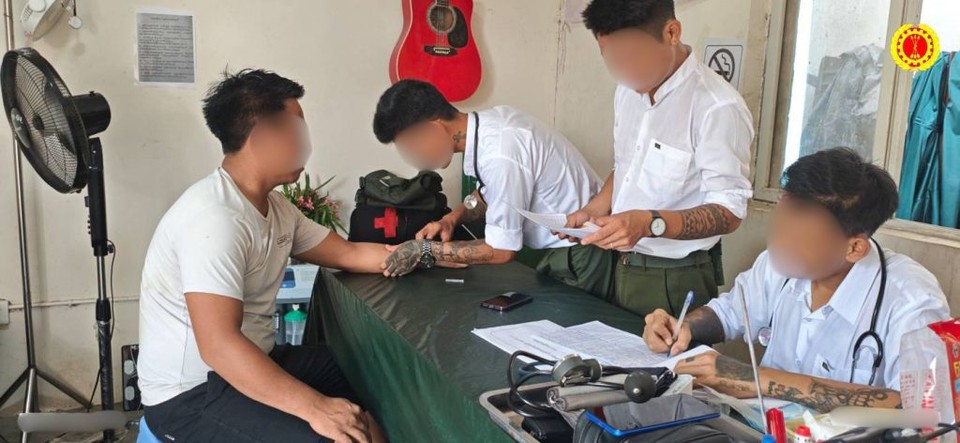
Figure 4. SSPP medical team providing healthcare service in Namkham township (source: SSPP Info)
Another example is the Facebook post about the SSPP leader’s third son’s wedding. Although highly personal, the event was shared on the group’s official page. Many comments criticised SSPP leaders for celebrating lavishly while ordinary people continue to suffer during the civil war. Some accused the leaders of enriching themselves at the expense of the Shan population, while others compared them unfavourably to TNLA leaders, who are seen as more modest and discreet. A few netizens even likened the SSPP to Kim Jong Un, arguing that the group prioritises its own interests while only pretending to care for the public. One comment, “အလှဘဲ မလုပ်ပါစေနဲ့” (don’t do it for show) (SSPP Info, 2026), captures this sentiment clearly. These reactions suggest that sections of the Shan population, the user inferred to be Shan based on their Facebook profile name, view SSPP’s actions critically, despite the group’s efforts to maintain a positive public image.
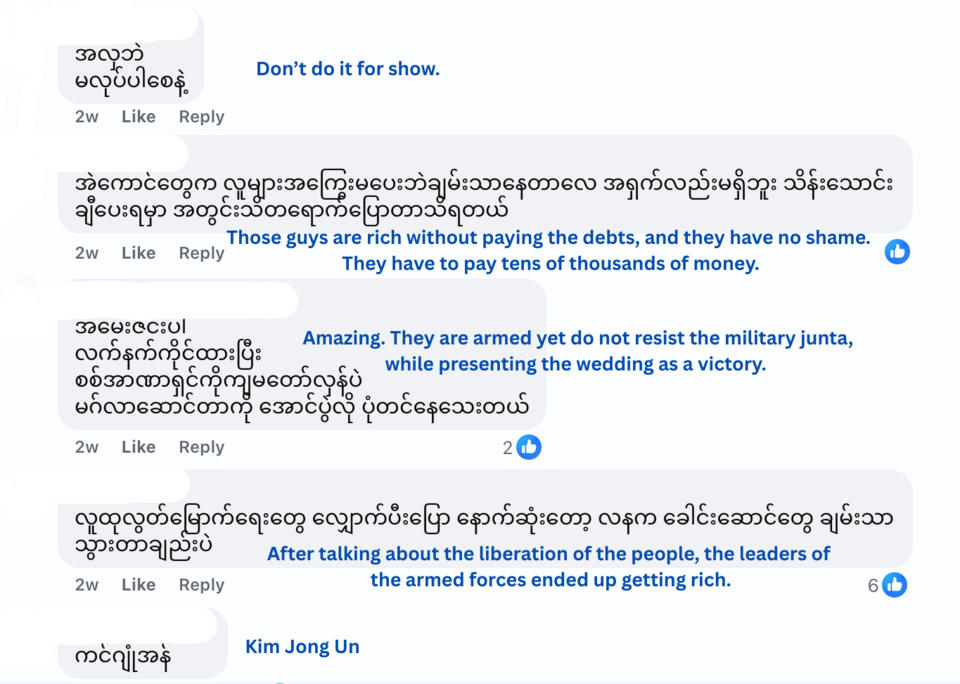
Figure 5. Public comments under the post of the wedding ceremony of General Soa Pan Pha’s third son on February 13, 2026 (source: SSPP Info)
These reactions also reflect broader contradictions in SSPP’s online image management. While SSPP Info highlights military clashes and humanitarian activities to strengthen legitimacy, it downplays politically sensitive issues, such as its recent peace talks with the RCSS. This selective presentation shapes a narrative that serves the group’s interests while avoiding content that may weaken public support. By avoiding politically sensitive issues, SSPP is often seen by some audiences as politically self-interested rather than genuinely committed to the Shan community welfare.
Conclusion
In the current context in Myanmar, the EAOs, such as SSPP, are utilising Facebook to construct a digital nation. Content analysed between January and March shows how SSPP performs local governance through infrastructure development, healthcare, and educational assistance. Through these online performances, the SSPP attempts to move beyond the image of an insurgent organisation and instead present itself as a legitimate authority capable of administering territory and representing Shan interests. Social media platforms like Facebook further enable these efforts by connecting diverse audiences and cultivating loyalty through performative legitimacy, such as through visibility, engagement, and transparency.
Drawing on Anderson’s concept of imagined communities, as well as Billig’s banal nationalism and Hobsbawm and Ranger’s work on invented traditions, this study demonstrates how national identity, and statehood can be constructed through both symbols and everyday practices. The SSPP consistently employs Shan language, Shan symbols, and its flag to reinforce a distinct Shan political identity. At the same time, the organisation frequently displays the Myanmar national flag alongside Shan and SSPP symbols. This reveals an important tension within SSPP’s identity construction: while attempting to portray itself as a representative of Shan autonomy and nationalism, it also shows its willingness to remain within the framework of the Myanmar state and, at times, cooperate with the military junta.
The SSPP’s online content also highlights the importance of education and religion in nation-building processes. Emphasising Shan-language education alongside Burmese instruction suggests attempts to foster future generations within a more Shan-centred national framework. Likewise, the group’s public commitment to Buddhism reflects another important dimension of legitimacy-building, as religion historically functions as a central component of identity formation and political authority in the region. Ceremonial participation with other minority communities further reinforces SSPP’s attempt to position itself as a regional political actor capable of maintaining inter-ethnic relations and representing a broader political order in northern Shan State.
Although they are making significant efforts in their online presentation, they appear not to consider the actual feelings or perceptions of the people. By paying closer attention to the audiences, the SSPP could adjust its online presentation to focus more on issues that netizens consider more politically and socially relevant. For example, posting more about negotiations and relations with the RCSS (the other EAO representing the Shan people) instead of promoting their own personal ceremonies like weddings. As a result, the SSPP’s digital performances do not always translate into positive public perception or popular support. This suggests that, although social media enables armed groups to construct and project quasi-state identities, audiences also expect honesty, accountability, and transparency rather than self-promotion. Without addressing these expectations, efforts at online state-building may be unable to create genuine public trust and support. Future research could analyse content over a longer period of time, providing a broader understanding of evolving patterns in EAOs’ digital statehood-building. Moreover, the discussion could be expanded by comparing how different EAOs construct legitimacy and national identity through online platforms.