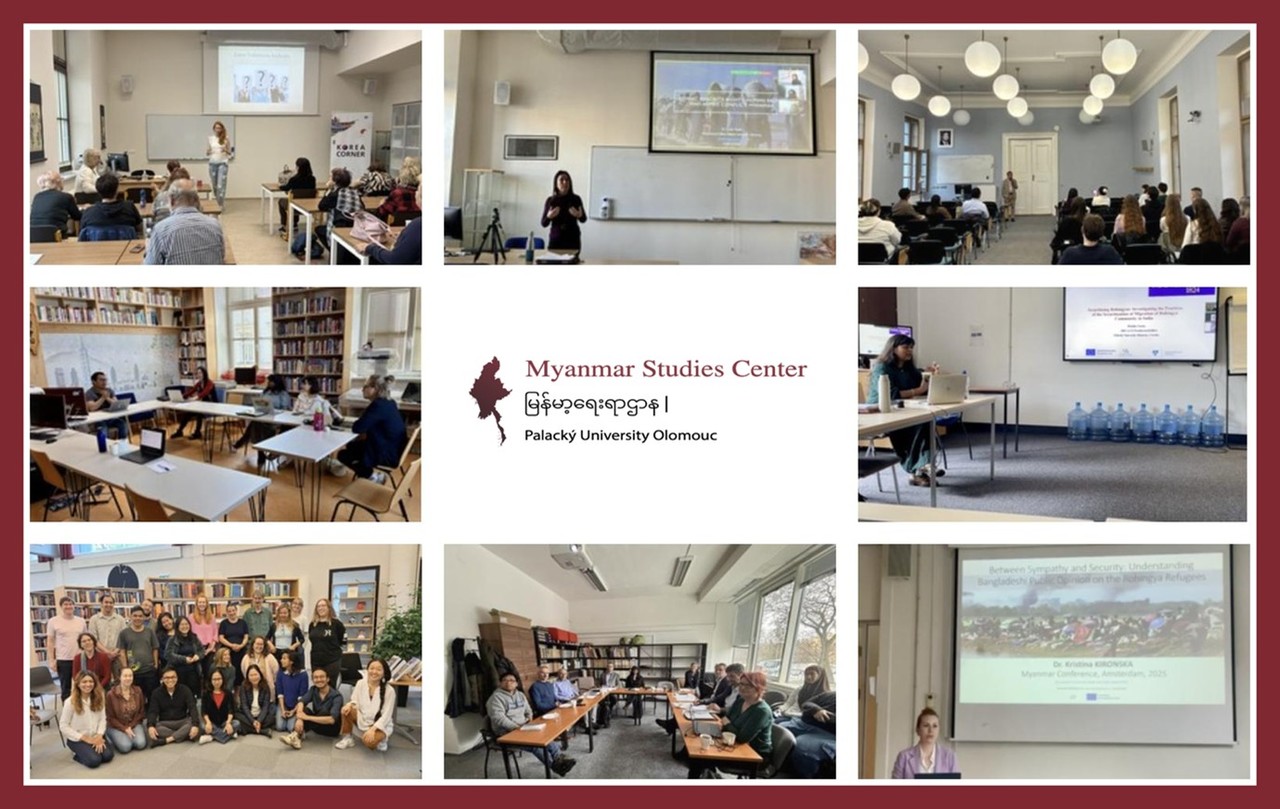
In 2024, the Myanmar Studies Center (MSC) at Palacký University Olomouc was established to create a space for sustained engagement with Myanmar—within academia and also the broader public. Two years on, the Center has developed into a platform that connects research, teaching, and outreach in a structured way.
Since its launch, MSC has built a program of lectures, workshops, and screenings. A key early milestone was the Interdisciplinary Myanmar Conference (2024), alongside a summer school focused on Indo-Pacific geopolitics and Southeast Asia. These were complemented by a steady flow of smaller-scale events.
More recently, activities have included a public talk in Olomouc by Soe Myint on media and resistance in Myanmar, lectures by our research fellows such as Cecile Medail and her talk on Myanmar’s conflict and its impact on minority groups, and workshops, such as the methodology workshop held in March where researchers exchanged fieldwork approaches and challenges.
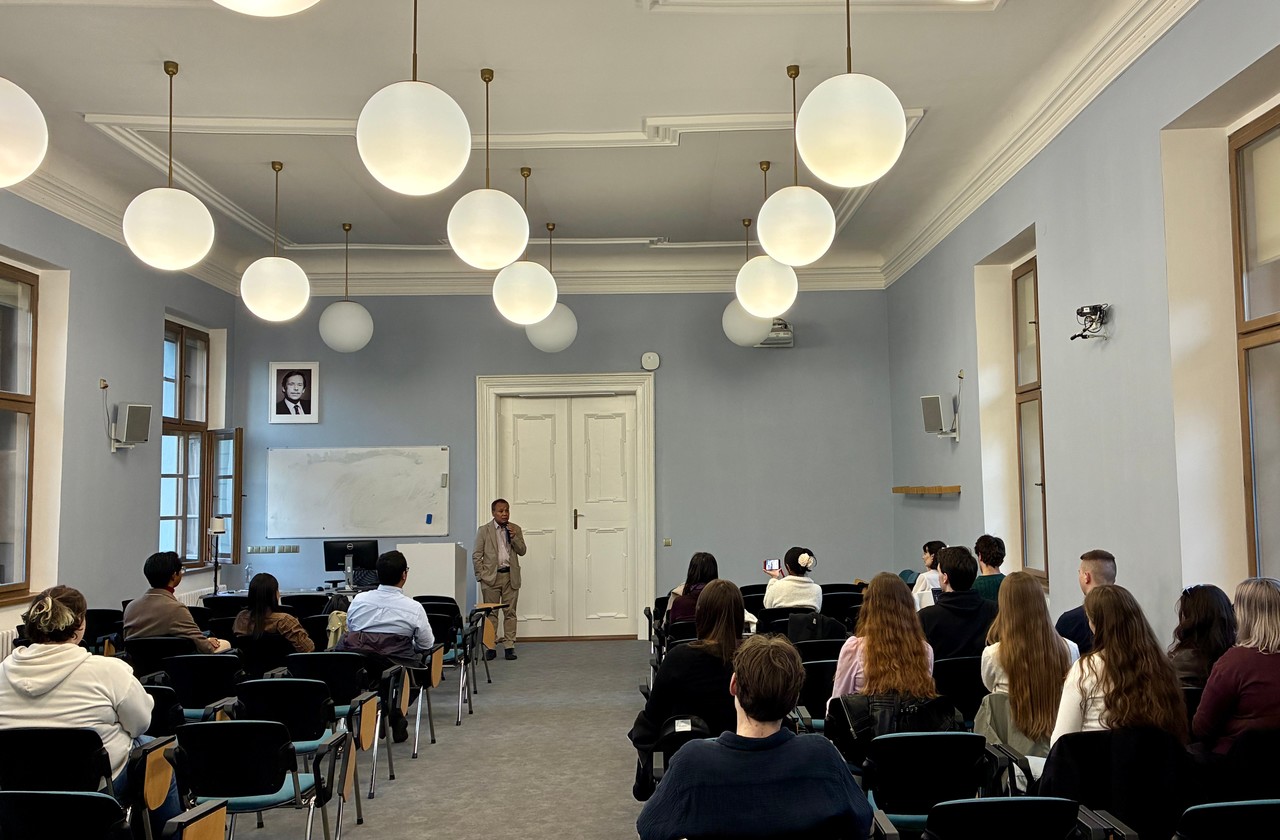 Soe Myint delivering a guest lecture at the Palacký University Olomouc
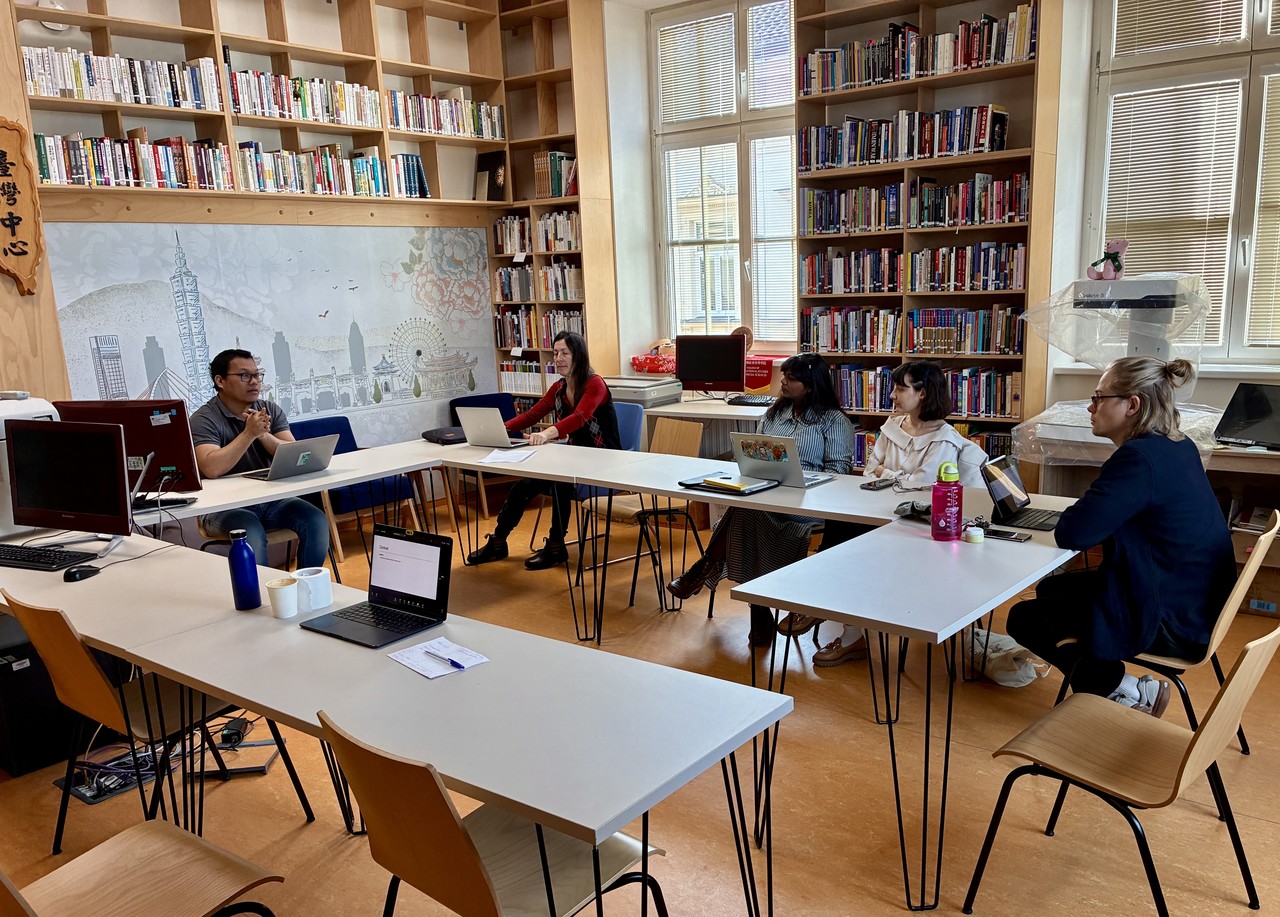 MSC methodology workshop
MSC has also organized film screenings (such as Thabyay: Creative Resistance in Myanmar) and public lectures (such as Barma/Myanmar: Výzvy 21. století, a lecture in Czech), often followed by discussions with researchers or practitioners. These events create accessible entry points into complex topics such as conflict, displacement, and civil resistance.
The Center’s activities are closely linked to teaching at the university. Guest lectures and discussions are integrated into courses such as Human Rights in Asia or Political Systems in the Indo-Pacific, giving students direct exposure to current research and expert perspectives on Myanmar.
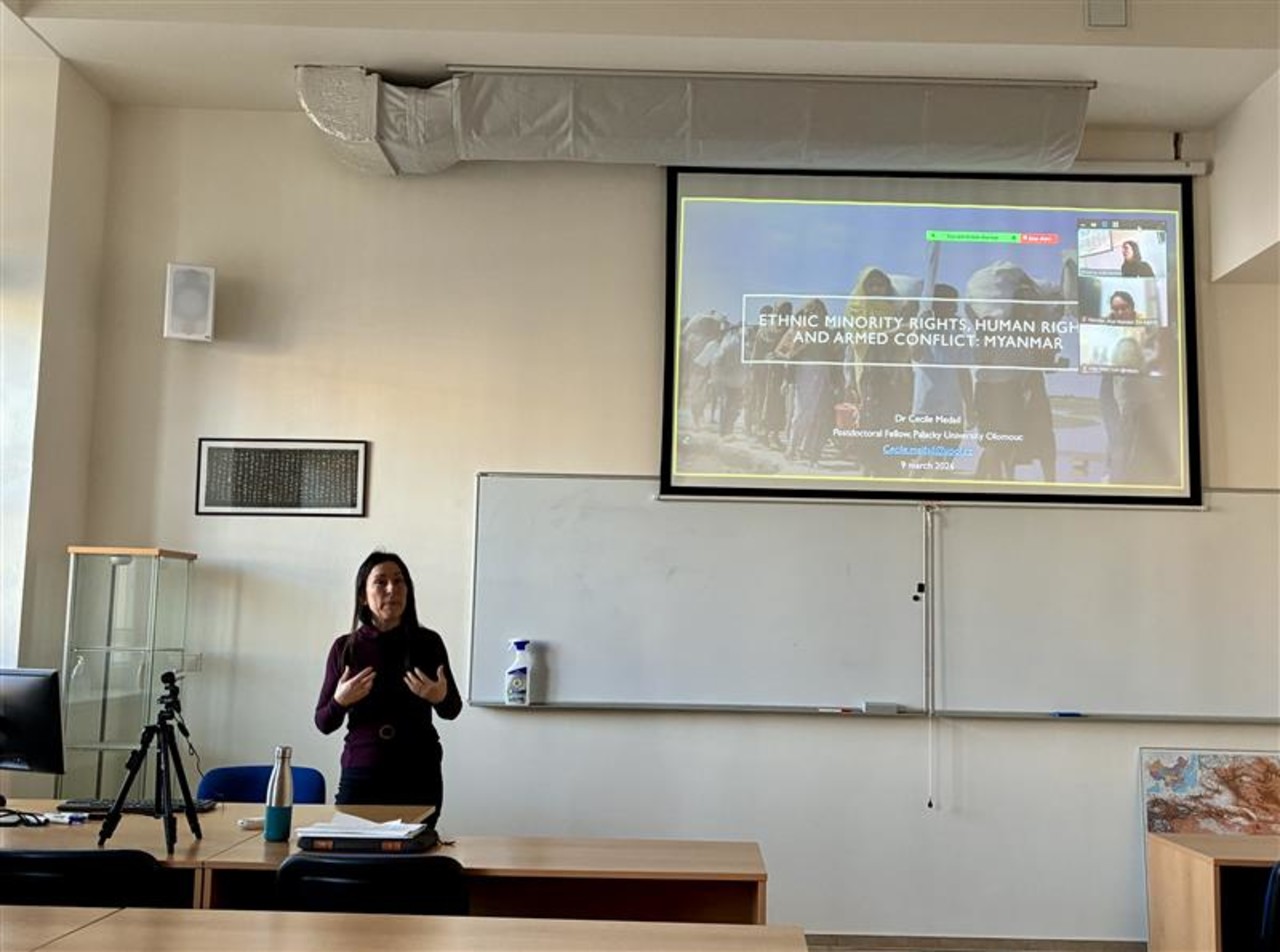 Cecile Medail delivering a guest lecture in the course Human Rights in Asia
Beyond publishing academic work (such as The challenges of Sino‑Russian alignment to the liberal international order in Southeast Asia by Julie Yu-wen Chen, Monique Taylor, Alfred Gerstl, Kristina Kironska; or Manufacturing insecurity: the politics of fear, securitisation practices and Rohingya refugee experiences in India by Monika Verma) MSC has developed a growing body of written output published on its website and through external platforms. These texts cover a range of topics, including the impact of the 2021 coup on education (A generation disrupted: How the 2021 coup destroyed education in Myanmar), the role of elections in sustaining military rule (Staging legitimacy: Why the world should ignore Myanmar’s sham elections; Elections as Spectacle: Myanmar’s Manufactured Legitimacy), questions of ethnic politics and conflict dynamics in Myanmar, as well as policy-oriented analysis and recommendations for European engagement with Myanmar’s resistance movement. These outputs are complemented by shorter analytical and reflective pieces, including field reports (Field Trip Report: Researching Rohingya Experiences Across South Asia) and contributions from guest authors, which help connect academic work with on-the-ground perspectives.
MSC’s work also pays attention to how broader political developments translate into everyday constraints. This is visible in contributions examining the experiences of Myanmar students navigating European visa systems, such as When paperwork becomes a barrier: Burmese students and European visas and From Opportunity to Ordeal: The Burmese Student Journey Through Visa Bureaucracy. These pieces highlight how administrative and legal frameworks shape access to education and mobility. By addressing both structural and lived dimensions, MSC’s work moves beyond abstract analysis and connects larger developments to concrete experiences.
Beyond the university, MSC researchers frequently comment for various international media outlets, including The Straits Times and Deutsche Welle. At the same time, MSC has been part of international academic exchanges, including participation in the International Burma Studies Conference at Northern Illinois University and collaboration with institutions in Europe and Asia.
In parallel with all these activities, the Center has supported Myanmar students through initiatives such as EMPM-funded internships and micro-credentials, connecting academic work with practical support. Our offerings include two courses that Burmese students can take (online): Human Rights in Asia (taught by Kristina Kironska) and Japan’s Role in International Affairs (taught by Federica Cidale, whose Myanmar research focuses on state formation and centre–periphery relations), and virtual internships at the Center. Additionally, through EMPM’s Short-Term Mobility Program, selected Burmese students have been able to spend a semester in Olomouc.
The Centre has also collaborated with selected candidates on applications for the Marie Skłodowska-Curie Fellowship (MSCA), supporting them in developing Myanmar-focused research proposals with the aim of joining the Center.
Looking ahead...
Over its first two years, the Myanmar Studies Center has established a program of academic and public events, produced research and analytical outputs, integrated its work into teaching and student engagement, and built connections with international partners and audiences. Taken together, these activities provide a solid basis for sustained Myanmar-focused research and discussion within the department and, more broadly, across Central Europe and Europe.
The next step is to build on this foundation—strengthening research output and further embedding Myanmar-related topics in teaching and collaborative projects. Upcoming activities include an exhibition, alongside additional outputs currently in preparation.
Two years in, the Center has created a space where Myanmar is studied, discussed, and contextualized on a continuous basis. Maintaining and developing that continuity will remain our central task.